Partha Bhattacharyya Honoured with Rabindra Ratna Puraskar 2026 for Excellence in Tabla
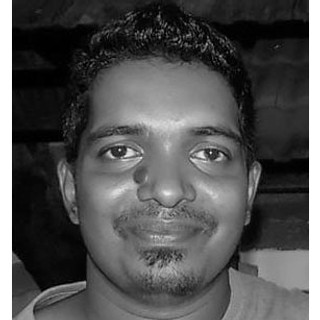

Partha Bhattacharyya, a dedicated Tabla player from West Bengal, is being recognized with the prestigious Rabindra Ratna Puraskar 2026 in the field of Music for his sustained dedication, discipline, and contribution to the rich tradition of Indian percussion. With around 15 years of experience in Tabla, Partha has built his musical journey on a deep appreciation for rhythm, rigorous practice, and a sincere commitment to the preservation and presentation of India’s classical musical heritage.
Tabla occupies a distinctive position in the musical traditions of the Indian subcontinent. More than simply a percussion instrument, it is a sophisticated medium through which rhythm, emotion, expression, and musical dialogue are communicated. The artist must possess a highly developed sense of timing, clarity, coordination, sensitivity, and control. For Partha Bhattacharyya, the Tabla represents a continuous journey of learning and artistic refinement. His 15 years of experience reflect sustained engagement with an art form that demands patience, concentration, discipline, and an enduring willingness to improve.
Coming from West Bengal, a state with a remarkable cultural and musical legacy, Partha’s artistic journey is connected with an environment where music and the arts have long been integral to cultural life. West Bengal has contributed enormously to Indian music, literature, theatre, dance, and the performing arts. Within this vibrant cultural landscape, Tabla artists play an important role in sustaining the rhythmic foundations of both classical and traditional musical performances.
Partha’s dedication to Tabla demonstrates the importance of perseverance in mastering a traditional musical discipline. Learning Tabla is a gradual process that requires repeated practice and an understanding of rhythm at multiple levels. From basic rhythmic patterns to more intricate compositions and performance techniques, the instrument requires a musician to develop both technical precision and artistic sensitivity. Years of consistent engagement allow a Tabla player to understand not merely the sounds produced by the instrument but also the language of rhythm itself.
Over the course of 15 years, Partha Bhattacharyya has remained committed to developing his musical abilities and strengthening his relationship with the Tabla. His journey represents the values that are essential to Indian classical music: dedication to practice, respect for tradition, concentration, humility before the art, and a continuous search for greater artistic expression.
The recognition through the Rabindra Ratna Puraskar 2026 is therefore significant as an acknowledgment of his musical dedication and his association with an important element of India’s cultural heritage. The award celebrates the contribution of artists who dedicate themselves to their respective disciplines and help ensure that traditional art forms remain meaningful and relevant for contemporary audiences.
The spirit of Rabindranath Tagore’s cultural philosophy provides an appropriate context for such recognition. Tagore’s creative legacy brought together music, literature, philosophy, art, and humanistic values, emphasizing the power of culture to connect individuals and communities. A recognition such as the Rabindra Ratna Puraskar can consequently be viewed as a celebration of artistic commitment and the continuing role of culture in society.
For Partha Bhattacharyya, the Tabla is not simply an instrument but a medium through which discipline and creativity come together. Every rhythmic phrase demands control, every composition requires concentration, and every performance provides an opportunity for artistic communication. The Tabla’s distinctive vocabulary allows a musician to explore an extraordinary range of rhythmic possibilities, from delicate and measured passages to powerful and energetic patterns.
The instrument also occupies a central position in Indian musical performance because of its ability to interact dynamically with melodic instruments and vocalists. A skilled Tabla player must listen carefully, respond appropriately, maintain rhythmic balance, and understand the character of the musical presentation. This requires a combination of technical training and musical awareness. Partha’s continued involvement with Tabla over a period of 15 years reflects his commitment to cultivating these qualities.
His recognition also highlights the importance of supporting traditional musicians in an era of rapidly changing entertainment and cultural consumption. Contemporary audiences encounter music through numerous digital platforms and formats, yet classical and traditional forms continue to provide a deep connection to India’s cultural history. Artists who remain committed to these disciplines serve as important links between generations.
The journey of a musician is rarely defined by a single achievement. It is shaped by years of practice, observation, learning, performance, and self-evaluation. For Tabla players, the process is particularly demanding because rhythm must become instinctive while remaining technically controlled. The musician must develop an internal sense of timing that allows complex rhythmic structures to be performed naturally and confidently. Such mastery can only emerge through sustained dedication.
Partha Bhattacharyya’s 15-year association with Tabla therefore stands as a testament to perseverance. His journey demonstrates that artistic achievement is built gradually through commitment to one’s craft. The recognition bestowed upon him through the Rabindra Ratna Puraskar 2026 acknowledges not only his experience but also the cultural value of his chosen discipline.
The award further places attention on the broader importance of percussion traditions in Indian music. While vocalists and melodic instrumentalists often receive considerable public attention, percussionists provide the rhythmic framework that gives a musical performance structure and movement. Tabla, in particular, has developed into one of the most sophisticated percussion traditions in India, with an extensive vocabulary and a rich performance culture.
Through his dedication to Tabla, Partha contributes to the continuation of this tradition. His work represents the role of individual artists in keeping classical music alive. Every musician who learns, practices, performs, and shares a traditional art form participates in the transmission of cultural knowledge. Such transmission is particularly important for younger generations, who may otherwise encounter traditional music only as a historical or ceremonial form.
Partha’s recognition is thus not merely a personal milestone. It also represents an appreciation of the values associated with Indian music: discipline, patience, cultural continuity, artistic expression, and respect for heritage. His journey demonstrates how a musician can build a meaningful identity through sustained commitment to a specialized art form.
West Bengal’s association with music and culture provides an especially fitting backdrop for Partha Bhattacharyya’s artistic journey. The state’s diverse traditions have created an environment in which classical, folk, devotional, contemporary, and literary forms of music coexist. The recognition of a Tabla artist from West Bengal adds another dimension to this rich cultural identity.
The Rabindra Ratna Puraskar 2026 can therefore be seen as an encouragement for Partha to continue his musical journey with the same dedication. Awards can acknowledge past contributions, but they can also provide motivation for artists to explore new dimensions of their craft. For a musician, every recognition can become an invitation to continue learning, performing, and contributing to the artistic community.
Partha Bhattacharyya’s story is ultimately a story of dedication to rhythm. Across approximately 15 years, his relationship with the Tabla has developed through sustained engagement with an instrument that demands both physical coordination and intellectual understanding. His commitment reflects the patience required to build artistic excellence and the importance of preserving traditional music through active practice.
The Rabindra Ratna Puraskar 2026 in Music is a meaningful recognition of this dedication. It celebrates Partha Bhattacharyya as a Tabla player from West Bengal whose years of experience represent a continuing commitment to Indian musical culture. His journey serves as an example of how perseverance and respect for tradition can help artists develop their own creative voice while remaining connected to the cultural foundations of their art.
As Partha continues his musical journey, the recognition can serve as an important milestone and an encouragement to deepen his artistic exploration. The future of traditional music depends not only on preserving old compositions and techniques but also on musicians who continue to practice, perform, interpret, and transmit these traditions in their own time.
With his 15 years of experience and continuing dedication to Tabla, Partha Bhattacharyya represents this living connection between tradition and the present. His recognition with the Rabindra Ratna Puraskar 2026 celebrates his contribution to music while acknowledging the discipline and commitment that have shaped his journey. It is a fitting tribute to a musician whose chosen instrument speaks through rhythm and whose continued dedication contributes to the enduring richness of India’s musical heritage.


